Hakone day trip or overnight stay? How I would decide
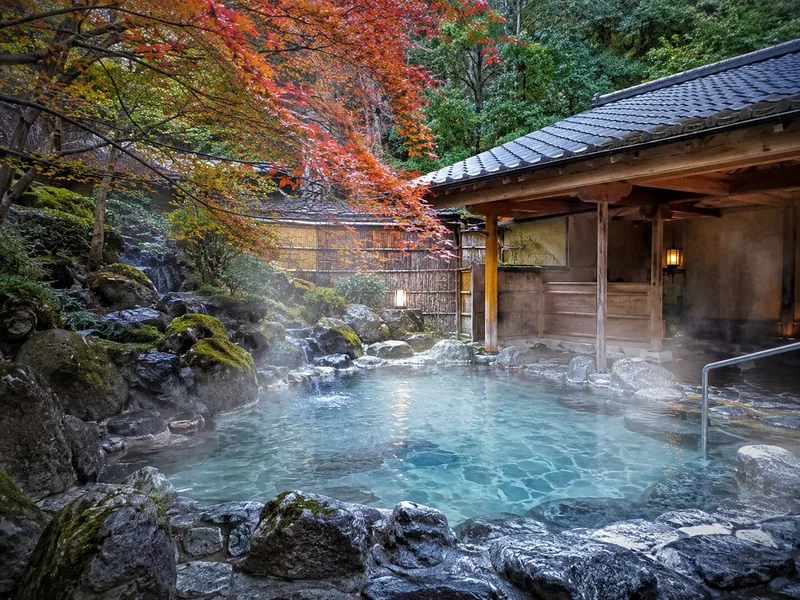
The case for going back to Tokyo the same night
Hakone is genuinely close. The Romancecar runs direct and seated from Shinjuku to Hakone-Yumoto in 75 to 90 minutes, and you can be back the same way in the evening without moving your luggage or your hotel. If your Tokyo booking is already paid for, a day trip costs you a train fare and a day, and nothing else. Ride the loop in one direction from an early start and you will have seen the things you came for — the full sequence is on the loop page.
The day trip also suits people who want Hakone as one landscape day inside a Tokyo holiday rather than as a destination. Six of the eight bookable products here are built on exactly that reading: coach tours that leave Tokyo between 7:30 and 8:00, take in Hakone as part of a Mt. Fuji day, and drop you back in the city at night.
The case for staying
Three arguments, and only the first is about scenery.
The clock stops being the enemy. Everything in Hakone winds down between about 16:30 and 17:00, and the ropeway’s own last run is 16:45, or 16:15 in December and January. On a day trip that time governs the entire plan; I have written out how it has to be counted backwards on is one day enough. If you are sleeping here, four o’clock is just four o’clock.
You get a second go at the weather. The ropeway suspends in high wind, and the cruise reroutes or stops in heavy fog or strong wind. Mark, who bought the pass, wrote: “The day we arrived was raining and windy and the cruise and ropeway were out of action and I almost cancelled. The next day was sunny and calm.” That is the entire argument for a night here, stated by somebody who had it happen. Check hakonenavi.jp before you commit either way.
Pace. Luz, who booked a private day here, wrote: “Since we were traveling with my 85 year old mother this was perfect for her because we went at a pace that was appro” — the review trails off, but the point does not. Teina, on the same product, wrote: “Started early to miss the ‘tour bus enmasse’.” Both are describing the same thing: control over the hour you do each leg. Staying overnight gives you that for free.
The pass quietly pushes you towards a night
There is no one-day Hakone Freepass. The shortest is two days at ¥7,100 ex-Shinjuku, and the Romancecar limited-express surcharge is extra on top, ¥1,200 each way. So a day-tripper who buys the pass is paying for a second day of validity that expires unused, while somebody staying the night is using what they already bought. That does not automatically make the pass right for either of you — on individual tickets one full loop comes to about ¥6,700 counting only the legs we could verify, and two legs are unpriced. The full working is on is the Hakone Freepass worth it.
If you are staying, your outbound and return legs no longer have to be the same. Some people come in on the Romancecar for the seat and go back via Odawara on the Shinkansen for the speed. Both routes and their fares are here.
What this page will not tell you
What a room costs, what a bathhouse charges, or which ryokan to book. We priced this site off operators’ own published fares, and there is no equivalent published source we could stand behind for a room rate or an onsen admission in Hakone. So there are no numbers here for either, and I would rather say that than make one up. Book accommodation through whichever channel you normally use and price it there.
If you stay, the day looks different
A guide who meets you at your hotel and travels by public transport makes sense once you are already in the valley. The private option here is priced per person, runs eight hours, and starts in Hakone — travel to and from Tokyo is explicitly not included, which is precisely why it suits somebody who slept here rather than somebody riding in for the day.
Frequently asked questions
Is Hakone better as a day trip or an overnight stay?
A day trip is enough for the loop and gets you back to Tokyo the same evening. An overnight stay buys you the valley after the last ropeway car at 16:45 and, more usefully, a second chance if wind or fog takes the ropeway and the cruise out. If your trip is short and the forecast is good, go for the day. See is Hakone worth it for the broader verdict.
Do I need to stay overnight to use the Hakone Freepass?
No, but the pass is sold as a minimum of two days at ¥7,100 — there is no one-day version — so a day-tripper pays for validity they will not use. Staying the night spends the second day you have already bought. The Romancecar surcharge of ¥1,200 each way is extra either way.
How much time do you need in Hakone to see everything?
More than a day, though "everything" is doing some work in that question. One full day covers the loop in one direction with real time at Owakudani and the lake. A second day is what buys you slow mornings and a weather buffer. What is verifiable about seasonal timing is on best time to visit Hakone.