Is Hakone worth it? An honest answer from someone who lives here
What you actually get for the day
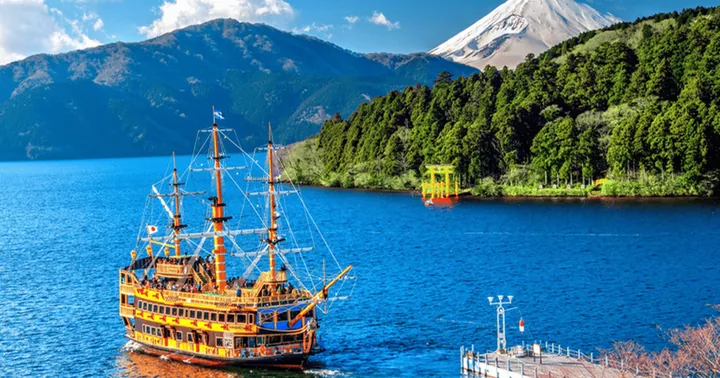
The classic circuit runs Hakone-Yumoto to Gora on the Hakone Tozan switchback train, ¥460 and roughly 35 minutes, then the cable car up to Sounzan, then the ropeway over Owakudani to Togendai, then the sightseeing boat across Lake Ashi to Motohakone, then a bus back down to Yumoto. I have set the legs out in order on the Hakone Loop page. Ridden in one direction from an early start, it fills a day properly and puts you on a train home in the early evening.
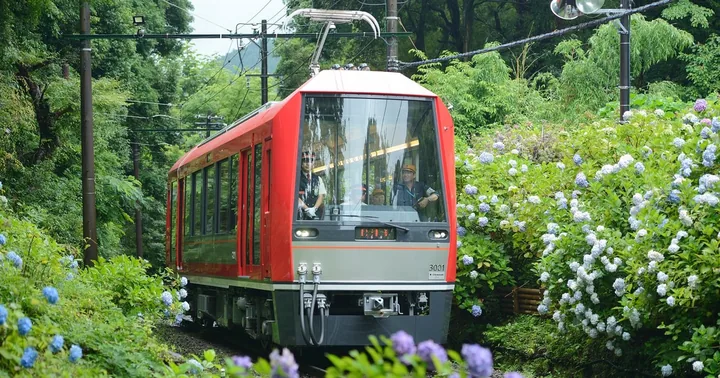
The Tozan line is the leg people plan to skip and then talk about afterwards. It reverses at the switchbacks, the driver and conductor swap ends, and in early summer the hydrangeas grow close enough to the windows to touch. Owakudani is the part everyone photographs: a live geothermal valley with sulphur vents going the whole time, and the black eggs boiled in the springs are the local speciality. The Japan Meteorological Agency has Hakone at volcanic alert Level 1, "exercise normal caution", as of August 2026. No eruption warning, no entry restriction. Owakudani has been restricted temporarily before, so check the day you travel rather than assume.
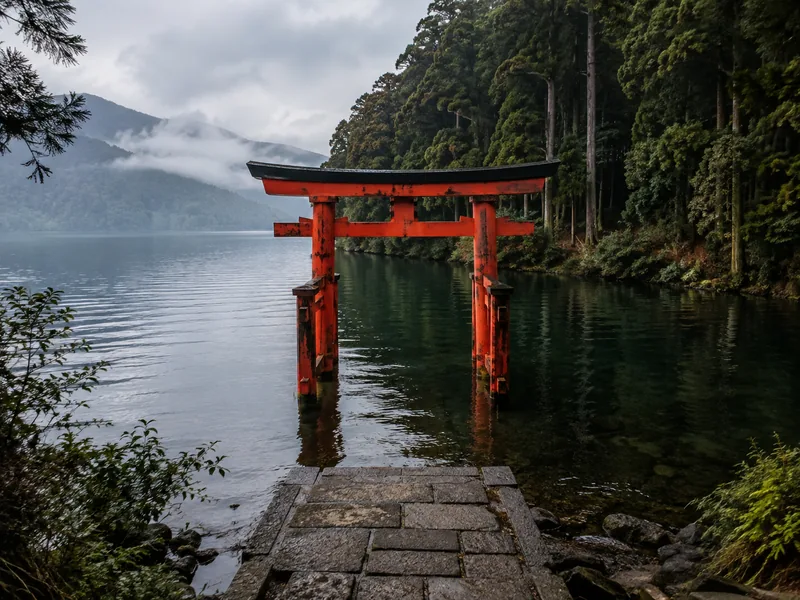
At Motohakone the vermilion torii of Hakone Shrine stands in the lake with its feet in the water. It is the photograph you have already seen. There is usually a queue for it.
Who I tell to go, and who I tell to skip it
What works
- You like riding things. Four kinds of transport in a day, and none of them is filler.
- You can leave Shinjuku early. The Romancecar is direct, seated and ¥2,470, about 75 to 90 minutes.
- You want one big landscape day out of a Tokyo trip and are happy to be moving for most of it.
- You are content to be driven all day and let somebody else watch the clock.
Worth knowing
- The ropeway’s last run is 16:45, and 16:15 in December and January. Arrive late and you lose a leg of the loop.
- The ropeway and the boat both stop for wind and fog. This is not rare.
- There is no one-day Hakone Freepass. The shortest version is two days at ¥7,100.
- If you want an onsen afternoon and the loop, one day will not hold both.
The clock decides this, not the budget
Almost everything in Hakone winds down between about 16:30 and 17:00, and the ropeway sets the hard edge. That single time is what separates people who come back saying Hakone was worth it from people who come back having seen a lake and a car park. I have written out how the day has to be counted backwards on is one day enough for Hakone.
Getting here is the other half of it, and this is where most plans go wrong before they start. There is no Shinkansen station in Hakone. The bullet train stops at Odawara, and from there you change onto the Hakone Tozan Line for ¥360 and about 14 minutes. The Romancecar from Shinjuku goes straight through to Hakone-Yumoto for less money. The routes are laid out side by side here.
The risk nobody puts in the brochure
A Hakone day trip is one clear day, bought in advance, with no refund on the weather. The ropeway suspends in high wind. The cruise reroutes or stops in heavy fog or strong wind. One of our own reviewers, Mark, bought the pass and wrote: “The day we arrived was raining and windy and the cruise and ropeway were out of action and I almost cancelled. The next day was sunny and calm.” He had a second day. On a day trip you do not.
Check live operating status at hakonenavi.jp the morning you travel. If the ropeway is down there are substitute buses, but the ride over the vents is the reason most people came, and you may rather move the trip than ride a bus past it.
What it costs to find out
Doing the loop on individual tickets from Shinjuku — ordinary Odakyu train out ¥1,270, Tozan train to Gora ¥460, ropeway one way ¥2,000, cruise ¥1,700, ordinary Odakyu back ¥1,270 — comes to about ¥6,700, against a ¥7,100 two-day pass. We could not verify the Gora to Sounzan cable-car fare or the bus fare back around the lake, and both are real legs, so the ticket total is higher than ¥6,700 and I cannot tell you by how much. For one full day riding the whole loop the pass is roughly break-even and probably a little ahead. For half a day it is not. The working is on the Freepass page.
If you would rather not plan any of it
Six of the eight bookable products here are Mt. Fuji coach tours that call at Hakone on the way, rather than Hakone tours as such. They leave Tokyo between 7:30 and 8:00 in the morning and run 8 to 11 hours, which is exactly the early start the day needs. The trade is that you see Hakone in 30-minute portions and you sit in Tokyo traffic at both ends.
 Do it yourself
Hakone: Train Pass with Unlimited Rides & Activity Discounts
 Most bookedRopeway one-way included
Tokyo: Mt. Fuji Tour, Hakone Ropeway, Owakudani, Lake Ashi
 Best ratedRopeway ticket included
Mt. Fuji & Hakone Tour: Arakurayama, OshinoHakkai, Owakudani
Frequently asked questions
Is Hakone worth visiting as a day trip from Tokyo?
Yes, if you are out of Shinjuku early and you ride the loop rather than picking at it. The ropeway’s last run at 16:45 (16:15 in December and January) is what makes or breaks the day, and a late start quietly deletes a leg. If you want an onsen afternoon as well, look at day trip versus staying the night instead.
Is Hakone worth it if the forecast is bad?
Less so, and I would say that out loud. The ropeway suspends in high wind and the cruise reroutes or stops in heavy fog, which removes the two legs most people came for. Check live operating status on the morning rather than the forecast the night before. We do not publish crowd predictions or odds on seeing Mount Fuji, because we could not verify any.
Is Hakone expensive?
It is mid-range and the numbers are public. The Romancecar from Shinjuku is ¥2,470, the ropeway is ¥2,000 one way, the Lake Ashi cruise is ¥1,700, and the two-day Freepass is ¥7,100. Prices for all three of those rose on 1 October 2025, so older blog figures read low. Full breakdown on what a Hakone day trip costs.